Why Small Business Voices Matter in Washington
 Last week, I had the opportunity to join fellow members of the National Small Business Association in Washington, D.C. for several days of meetings, conversations, and advocacy on issues affecting small businesses across the country.
I went to Washington, D.C. with a very specific purpose. As a member of the National Small Business Association’s Leadership Council, I was there to advocate on several issues that directly affect small businesses, including proposed changes involving the SEC’s capital-raising framework and the SBA’s definition of what qualifies as a small business.
As a member of the National Small Business Association's Leadership Council, my role was to lead our discussions on SEC and SBA regulations and policy, part of a broader conversation with congressional offices about small businesses' access to capital.
For the SEC, one of the issues I raised was the practical challenge small businesses face under Regulation D, particularly the differences between Rule 506(b) and Rule 506(c). Rule 506(b), one of the most commonly used exemptions for private fundraising, generally prohibits general solicitation, while Rule 506(c) permits broader solicitation but requires that all purchasers be accredited investors and that the issuer take reasonable steps to verify their accredited status.
In one of our meetings, we were told that in some industry groupings, thresholds could reach as high as roughly 5,000 employees.
For an early-stage company trying to build an investor network, those distinctions are not academic. They affect where founders can look for capital, how openly they can talk about raising money, and what compliance obligations follow when they do.
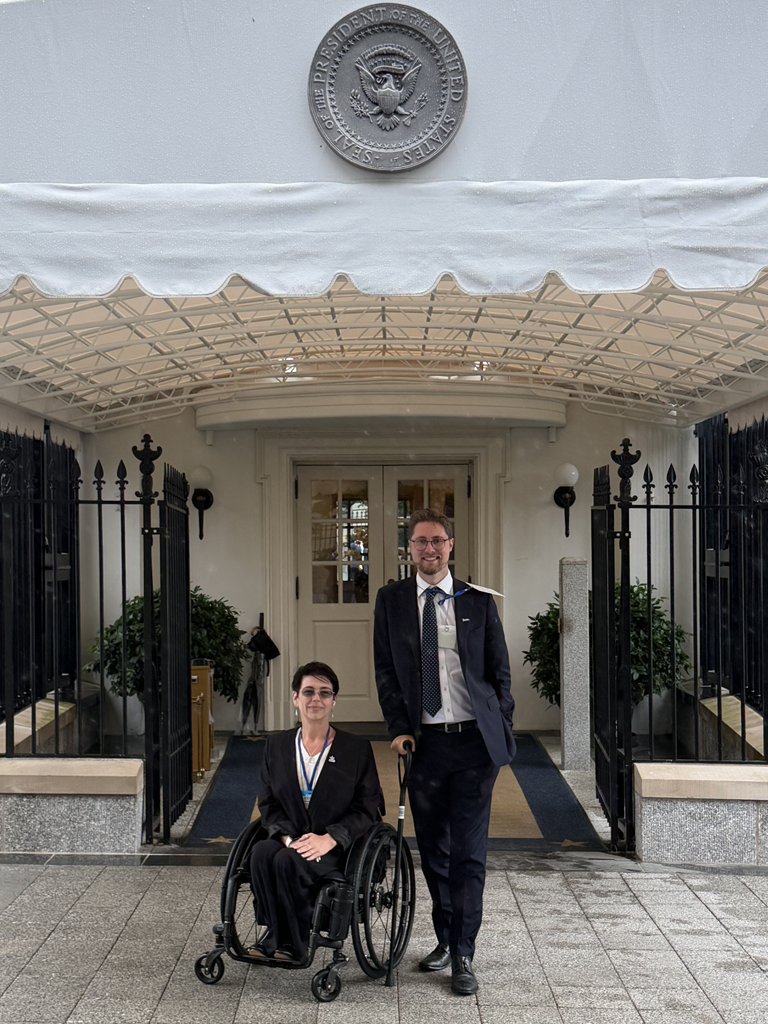 On the SBA side, the agency is currently proposing significant changes to its size standards, including higher thresholds and broader industry classifications. Those standards determine which companies qualify as small businesses for important federal programs, including contracting opportunities.
The proposed changes are significant because the definition of “small” would continue to vary by NAICS code or industry group, but under the new market-based methodology some businesses could qualify with employee counts reaching into the thousands. SBA’s own examples include semiconductor manufacturers increasing from 1,250 to 2,800 employees, shipbuilding from 1,300 to 2,300 employees, and oil drilling from 1,000 to 2,650 employees. The proposal would also consolidate nearly 1,000 existing industry categories into 338 broader groupings. (Small Business Administration)
Depending on the industry grouping and resulting size standard, some analyses of the proposal have discussed thresholds reaching as high as roughly 5,000 employees. That is why the distinction matters: this is not a proposal to redefine every small business as a 5,000-person company, but it could allow companies employing thousands of people to remain classified as small businesses in certain industries.
For many truly small businesses, that raises an important question: at what point does expanding the definition of “small” begin placing companies with only a handful of employees in competition for the same programs and opportunities as companies employing thousands?
These were not abstract issues for me. They directly affect how companies like mine raise money, grow, compete, and navigate systems that were often designed very differently from the realities faced by an early-stage business.
Representing More Than My Own Company
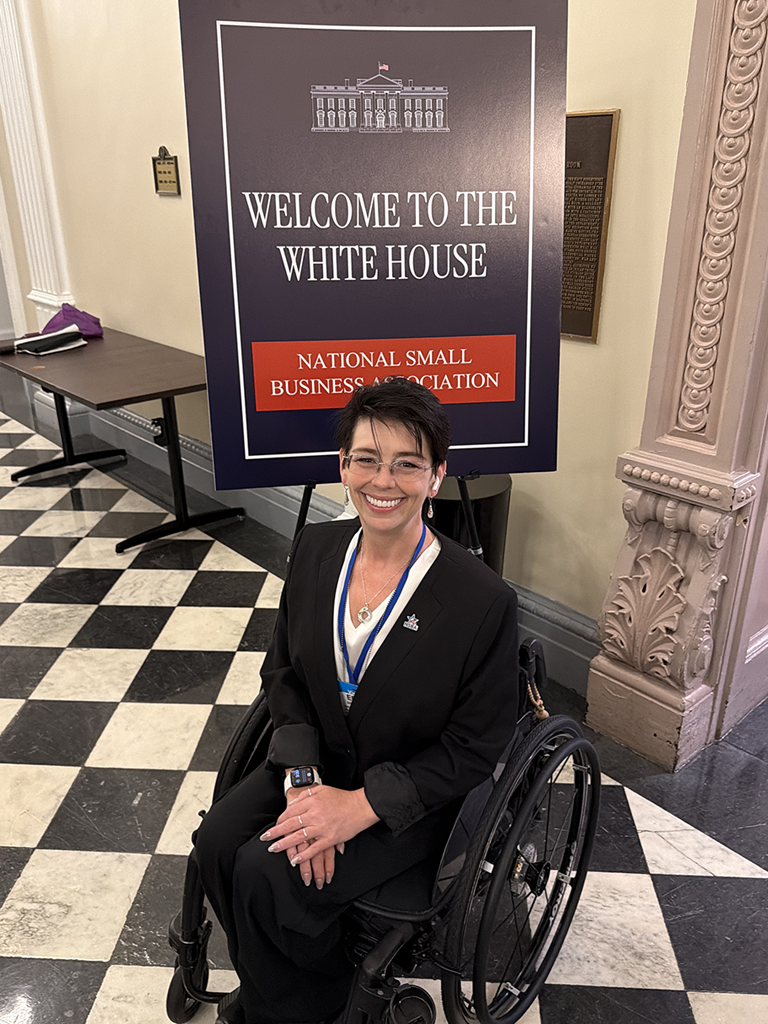 It was also an honor to be asked to represent women and minority business owners, particularly those working in technology. That responsibility meant a great deal to me. I was not there only to speak from my own experience as a founder, but to help make sure perspectives that are still too often missing from these conversations were represented in the room.
What stood out to me throughout the week was how important it is for policymakers to hear directly from the people who are actually building and operating small businesses.
There is a difference between discussing a regulation in the abstract and explaining what it means when you are the founder trying to raise capital, make payroll, navigate compliance requirements, hire employees, or simply keep a company moving forward. That distinction became a recurring theme throughout the week.
When Policy Meets the Reality of Running a Business
As a technology founder, much of my focus was on access to capital and the regulatory environment surrounding small-business fundraising. For early-stage companies, particularly those that do not already have access to established investor networks, the rules governing how companies can find and communicate with potential investors can have a very real effect on whether those companies ever get the opportunity to grow.
I also spoke about the cumulative effect of compliance requirements. Any individual requirement may appear reasonable when viewed by itself. The challenge for a small company is that those requirements rarely exist in isolation. Founders are often simultaneously handling financing, taxes, hiring, contracts, cybersecurity, reporting obligations, product development, sales, and day-to-day operations, frequently without the specialized departments available to larger organizations.
That does not mean small businesses should be exempt from appropriate oversight. It means policymakers need to understand the practical impact of the systems they create and whether those systems work as intended for businesses of very different sizes.
One of the things I appreciated most about the NSBA event was that the conversations were not limited to one industry or one type of business. The people participating brought different experiences, different concerns, and different perspectives. Yet many of the underlying challenges were remarkably similar.
- Access to capital matters.
- Regulatory clarity matters.
- The cost of compliance matters.
- And perhaps most importantly, having a seat at the table matters.
A Seat at the Table
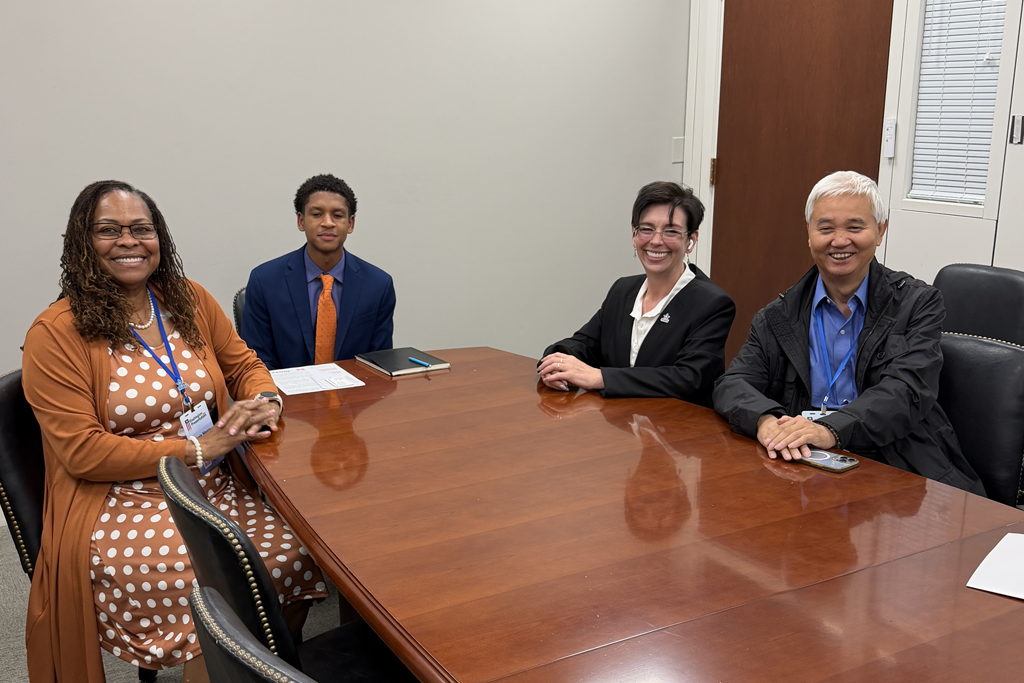
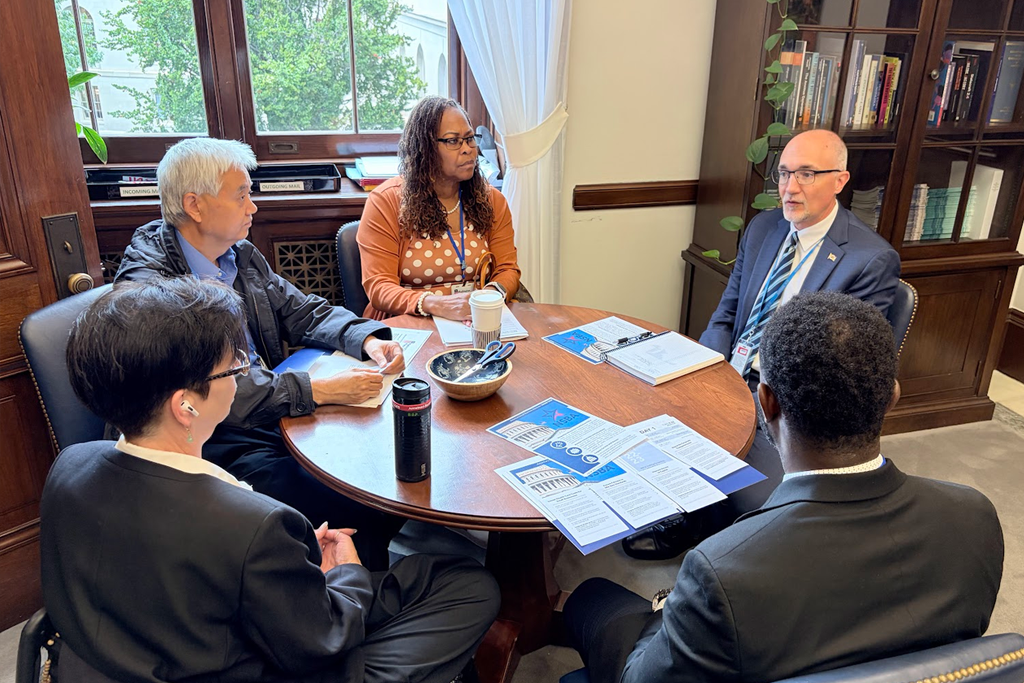 Over the course of the week, I had opportunities to speak directly with congressional offices and other government representatives about issues affecting entrepreneurs and small businesses. Not every conversation produced an immediate answer, nor should anyone expect a few meetings in Washington to suddenly resolve complex policy questions.
But those conversations still matter. Policy is ultimately shaped by information, and if small-business owners are not part of that information flow, decisions can easily be made without a full understanding of how they will work outside of Washington.
For me, that is one of the most valuable aspects of participating in the NSBA Leadership Council. It gives business owners an opportunity not merely to observe the policy process, but to participate in it.
I build technology for a living. Most days, my attention is on product development, customers, infrastructure, funding, and the countless other things that come with building a company. Public policy can sometimes feel far removed from that work. It is not.
Why We Will Keep Showing Up
 The policies governing investment, taxation, reporting, employment, contracting, and business formation eventually find their way into nearly every company, including very small ones.
Being in Washington reinforced something I already believed: small businesses need to be part of those conversations before decisions are made, not simply after the consequences reach us.
I am grateful to NSBA for giving entrepreneurs and small-business owners that opportunity, and I am looking forward to continuing to contribute wherever my experience can be useful.
Sometimes advocacy begins with something very simple: Showing up, being willing to speak, and making sure the people making decisions understand what those decisions look like from the other side of the table.
About Sarrene Miller
Sarrene Miller is the Founder and CEO of TGS Tech, the company behind Apex Engine and AE CoCast. A technology founder and design engineer, she has spent decades working in software, real-time 3D technology, and collaborative development platforms.
She also serves on the National Small Business Association’s Leadership Council, where she advocates on issues affecting small businesses, including access to capital, regulatory policy, and the challenges facing women and minority founders in technology.
At TGS Tech, Sarrene leads the development and commercialization of technologies focused on collaboration, accessibility, and real-time digital experiences.