How Late March 2026 Redefined Technology Investment
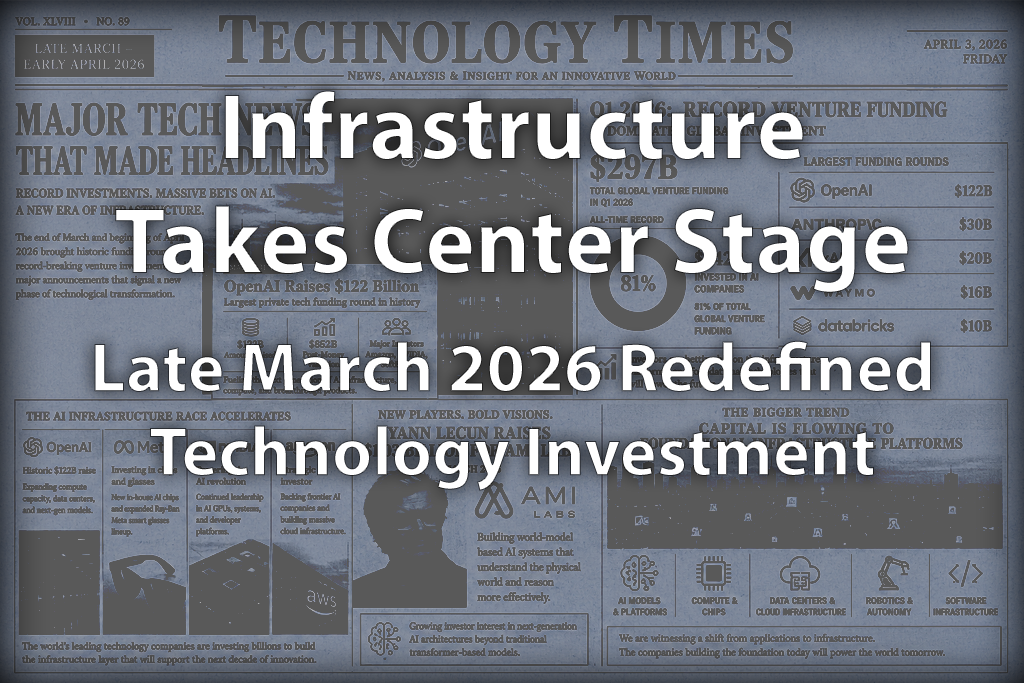 The final days of March and the opening of April 2026 marked one of the most significant periods in recent technology history. In just a few days, the market witnessed the largest private fundraising round ever completed, record-setting venture capital deployment, and a continued acceleration toward infrastructure platforms that are expected to shape the next generation of artificial intelligence, cloud computing, and interactive development.
For entrepreneurs, investors, and technology leaders, these developments provided more than headline news. They offered a clear signal that capital markets are increasingly focused on foundational systems and long-term infrastructure rather than short-lived applications. This shift is particularly important for companies building core platforms designed to support large-scale collaboration, simulation, and AI-driven workflows.
OpenAI Raises $122 Billion and Reaches an $852 Billion Valuation
On March 31, 2026, OpenAI announced the completion of a $122 billion private fundraising round, the largest in technology history. The financing reportedly included participation from major strategic investors such as Amazon, NVIDIA, and SoftBank Group, and valued the company at approximately $852 billion post-money.
The size of this investment reflects the growing belief that artificial intelligence will serve as a foundational layer for future software, services, and industrial systems. The funds are expected to support expanded compute infrastructure, additional data center capacity, and development of next-generation models and products.
This milestone places OpenAI among the most valuable private companies in the world and underscores the willingness of investors to commit unprecedented levels of capital to organizations building large-scale technical infrastructure.
Global Venture Funding Sets a New Record in Q1 2026
The broader venture market reinforced this trend. According to Crunchbase News, global venture funding reached approximately $297 billion during the first quarter of 2026. Artificial intelligence companies accounted for roughly $242 billion, representing more than 80 percent of all venture investment during the period.
This concentration of capital demonstrates that investors are prioritizing technologies with the potential to become core infrastructure for the global economy. Funding is increasingly directed toward:
- Artificial intelligence platforms
- Semiconductor design and manufacturing
- Data center and cloud infrastructure
- Autonomous systems and robotics
- Cybersecurity and enterprise software
The message is clear. Investors are allocating capital to technologies that enable and support entire ecosystems rather than isolated consumer applications.
A New Era of Infrastructure Investment
The current investment cycle resembles earlier periods when capital flowed into railroads, telecommunications, electrical grids, and the internet. In each case, investors backed the underlying systems that allowed countless other businesses to emerge and grow.
Artificial intelligence and real-time collaborative platforms are following a similar path. Building these systems requires significant upfront engineering, specialized talent, and long development timelines. As a result, companies with strong technical foundations and clear architectural advantages are attracting greater attention from investors who understand the scale of the opportunity.
This trend is encouraging for founders developing deep technology platforms. It suggests that the market increasingly recognizes that transformative infrastructure often demands patience, substantial resources, and long-term strategic thinking.
Strategic Implications for Emerging Technology Platforms
For companies building foundational systems, these events validate a broader market thesis. Investors are willing to support technically ambitious projects when they address meaningful industry challenges and create opportunities across multiple sectors.
Platforms that combine cloud-native architecture, real-time collaboration, simulation, and artificial intelligence are particularly well positioned. Such systems can serve diverse markets, including gaming, engineering, education, digital twins, architecture, smart cities, and enterprise collaboration.
The increasing emphasis on infrastructure also favors companies that focus on interoperability, scalability, and integrated workflows rather than point solutions designed for a single narrow purpose.
What This Means for TGS Tech and Apex Engine
For TGS Tech, the developments of late March and early April 2026 reinforce a central principle behind Apex Engine. The future of software lies in collaborative, cloud-native platforms that allow teams to build, test, validate, and deploy together in real time.
Apex Engine was designed as an authoritative development environment where users can create, share, and work simultaneously regardless of geographic location or traditional barriers. By integrating collaborative workflows, scalable infrastructure, and AI-ready architecture, the platform aligns closely with the broader direction of the technology market.
The surge in investment toward artificial intelligence and infrastructure suggests that investors increasingly understand the value of systems that serve as foundational layers for future innovation.
The extraordinary capital commitments announced in early 2026 signal a broader transformation in how technology is financed and developed. Rather than focusing solely on short-term applications, investors are backing platforms that provide the essential infrastructure for future industries.
For entrepreneurs and innovators, this represents a meaningful opportunity. Organizations building scalable, interoperable systems with strong technical foundations are better positioned than ever to attract strategic partners, institutional investors, and long-term market adoption.
The end of March and the beginning of April 2026 may ultimately be remembered as a defining moment when the investment community demonstrated, at unprecedented scale, its confidence in the technologies that will shape the next era of digital infrastructure.