When the Physical World Becomes the Development Environment
 The week of March 17, 2026 produced a cluster of announcements that, taken together, signal something significant for anyone building in real-time 3D. NVIDIA's GTC 2026 brought the expected wave of hardware and infrastructure news, but beneath the GPU specifications and cloud capacity numbers, three developments stood out as directly relevant to where real-time collaborative development is heading. Each tells a different part of the same story.
For TGS Tech and Apex Engine, these three developments are not background noise, they are a direct map of the territory the platform is built for. Apex Engine is a cloud-native real-time collaborative 3D development platform targeting precisely the industries where Real2Sim pipelines, GPU-accelerated cloud infrastructure, and AI-augmented design workflows are converging: AEC, digital twin, and simulation. The real-world-to-simulation pipeline that XGRIDS demonstrated at GTC is the same capture-to-environment workflow that Apex Engine's collaborative world-building layer is designed to receive and operate on. The AWS and NVIDIA infrastructure commitments validate the cloud architecture decisions that underpin Apex Engine's deployment model. And the shift in architectural practice toward AI-augmented design workflows, documented this week by Learn Architecture, reflects the professional expectations of the client base Apex Engine is being built to serve. The convergence happening across these three stories is not a future state. It is the present, and it is where Apex Engine is positioned.
Real-World Spaces as AI Training Data
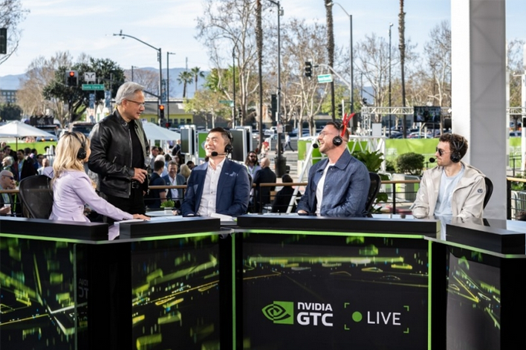 At NVIDIA's GTC, spatial intelligence company XGRIDS presented a pipeline they call Real2Sim: the conversion of physical environments into high-fidelity simulation-ready world models using LiDAR and computer vision. The core argument is straightforward. For AI systems, particularly robotics and embodied AI, to operate reliably in the real world, they must train in environments that accurately represent it. Static, manually modelled simulation environments do not meet that bar at scale. XGRIDS demonstrated their approach across multiple GTC venues, including a joint showcase with AWS, showing a complete workflow from physical space capture through world model generation to simulation training.
The implications extend well beyond robotics. Any platform that needs to represent real environments digitally, whether for construction coordination, facility management, or digital twin deployment, is working on the same fundamental problem: how do you close the gap between the physical and the simulated? The answer XGRIDS is building toward is a continuous, updateable pipeline rather than a one-time modelling exercise. You can read more about their GTC presentation at Newswire.
The Infrastructure Behind the Environments
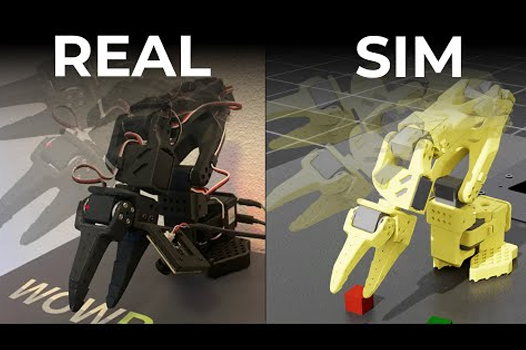 Running parallel to the Real2Sim conversation at GTC was a set of announcements from AWS and NVIDIA that clarify the infrastructure direction for exactly these kinds of workloads. AWS committed to deploying over one million NVIDIA GPUs across its global cloud regions starting in 2026, covering both Blackwell and Rubin architectures. More practically for real-time 3D development, AWS announced support for NVIDIA RTX PRO 4500 Blackwell Server Edition GPU instances, positioning itself as the first major cloud provider to do so. These are not training-only configurations. The RTX PRO line is specifically suited to graphics workloads, rendering pipelines, and the kind of real-time visual compute that collaborative 3D environments require.
The deeper signal in the AWS and NVIDIA announcements is directional: cloud infrastructure is being built explicitly for workloads that combine real-time rendering, AI inference, and data synchronisation simultaneously. That is not a gaming workload profile. It is an AEC, digital twin, and simulation workload profile. The infrastructure is arriving in step with the demand. For a broader look at what came out of that week, the AWS weekly roundup for March 23 covers the key launches in detail.
AI Rendering Is Now a Professional Baseline in Architecture
 Away from the GTC conference floor, a piece published the same week by Learn Architecture made a case that deserves attention in this context. Their analysis of AI rendering adoption in architecture firms found that 86% of over 1,200 architecture professionals surveyed by Chaos and Architizer now believe AI will play a significant role in the future of the field, and that image generation has moved from novelty to utility across most firms at every project stage. The article frames AI rendering not as a software preference but as a professional skill, one that involves understanding which tool fits which phase of the design workflow, how to evaluate AI-generated output critically, and how to integrate it with traditional rendering pipelines.
What this signals for platforms like Apex Engine is a client base that is already accustomed to working in AI-augmented environments and is actively looking for tools that match that expectation at the collaboration layer, not just the visualisation layer. The question firms are increasingly asking is not whether to use AI in their design workflow, but whether their collaboration infrastructure can keep pace with how quickly that workflow now moves.
What This Means for Real-Time Collaborative Development
These three developments are not coincidental. They reflect a convergence that has been building for several years: the physical world is increasingly legible to AI systems, the cloud infrastructure required to process and render that data in real time is scaling rapidly, and the professional communities who will use these environments are already adapting their workflows to meet it. The gap between where the infrastructure is heading and where most real-time 3D collaboration tools currently sit is exactly the gap Apex Engine is built to close. The week of March 22, 2026 made that gap a little more visible.