TGS Tech Founder Sarrene Miller Participates in SEC Small Business Forum on Startup Capital Formation
Policy discussions focused on funding challenges facing deep technology startups, regulatory changes, and new pathways to support small business innovation
 TGS Tech recently participated in the 45th Annual Small Business Forum hosted by the U.S. Securities and Exchange Commission (SEC) in Washington, D.C. The forum brought together policymakers, regulatory leaders, entrepreneurs, and investors to discuss the evolving challenges facing small businesses and startups seeking access to capital.
Representing the company was Sarrene Miller, Founder and CEO of TGS Tech, who joined industry leaders in a series of panel discussions and breakout sessions designed to identify barriers to capital formation and propose solutions that can better support innovation and entrepreneurship across the United States.
Unlike many industry conferences, the SEC Small Business Forum serves as a working policy event. Participants collaborate to develop recommendations that are formally voted on and submitted to Congress, the SEC, and the Small Business Administration (SBA) to help guide future regulatory and legislative improvements affecting small businesses nationwide.
A limited group of participants are selected to attend and participate in person, contributing directly to breakout discussions and the final voting process that determines which recommendations are advanced to federal policymakers.
Key Issues Raised During the Forum
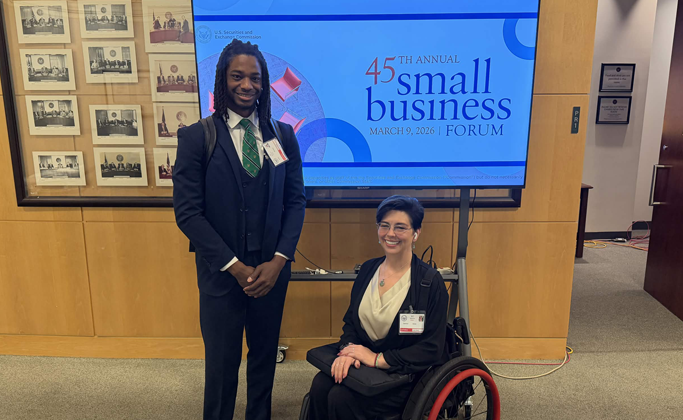 During the forum discussions, Miller raised two key policy considerations affecting technology startups across the United States.
The Changing Investment Landscape
Over the past decade, the investment and regulatory landscape has shifted significantly. Rapid waves of investment surrounding emerging technologies, including blockchain, cryptocurrency, and artificial intelligence, have occurred in close succession.
These back-to-back technology cycles created an environment where many investors had limited time to recalibrate their due diligence processes and riskframeworks between market shifts. As a result, startups today are navigating a funding ecosystem where expectations, timelines, and investment criteria have changed rapidly.
For founders building long-term technology platforms, this shifting landscape has created additional uncertainty as companies work to align development timelines with evolving investor expectations.
The “Middle Stage” Funding Gap for Deep Technology
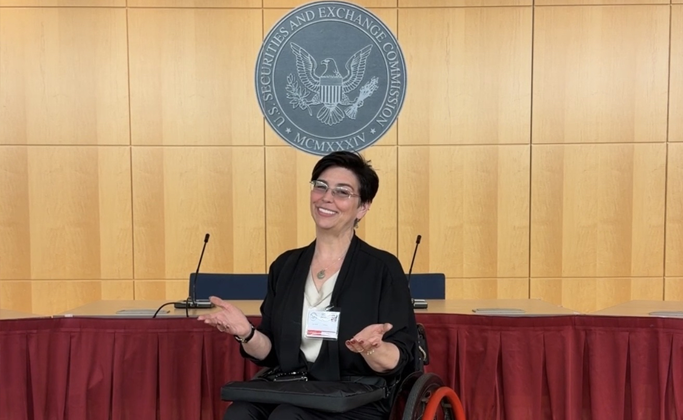 Miller also highlighted a structural funding gap affecting deep technology companies across multiple sectors, including cloud infrastructure, advanced computing platforms, and scientific innovation fields such as life sciences and biotechnology.
In previous market cycles, companies at this stage might have been considered mid-to-late seed stage. However, changes in investor expectations and funding dynamics over the past several years have shifted investment timelines and criteria, leaving many deep technology startups navigating a narrower set of funding pathways.
These companies often require extended development timelines and significant engineering or research investment before they can generate revenue. As a result, many fall into a difficult middle category within the startup ecosystem.
- Too advanced for accelerator or incubator programs
- Still pre-revenue due to long research, development, or engineering cycles
- Often one to two years away from commercial launch
Companies in this stage have typically moved well beyond the concept phase and may already have working systems or prototypes under active development. However, the time required to complete large-scale infrastructure platforms or scientific technologies means they may still be pre-revenue.
This creates a structural funding gap where companies are frequently too advanced for early-stage startup programs but not yet aligned with current traditional venture capital timelines, leaving limited options outside traditional venture funding, premature public offerings, or reliance on federal and local grant programs such as SBIR.
During the discussion, Miller asked regulators and industry participants:
“What options currently exist for small businesses outside of traditional venture funding, premature IPOs, or reliance on federal and local grant programs such as SBIR, particularly for deep technology companies that are pre-revenue but past the accelerator stage?”
Tax Policy and Innovation Challenges
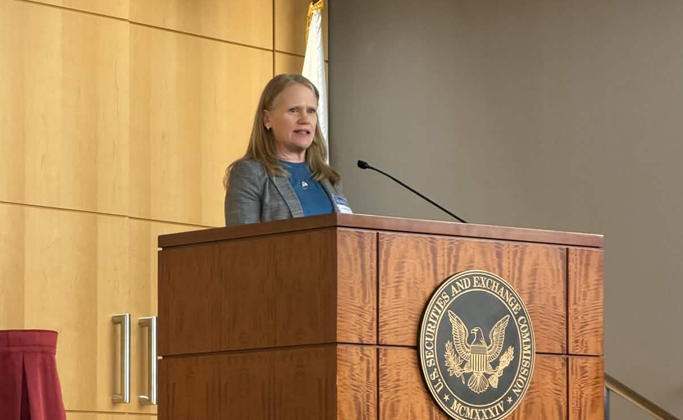 In addition to capital formation issues, Miller also noted that broader policy changes outside the direct scope of the SEC or SBA have introduced additional complexity for founders. Changes in tax policy and incentives available to small businesses have created new challenges for startups nationwide, particularly those operating in research-driven industries.
These challenges are especially significant given the role small businesses play in technological advancement. According to research frequently cited in policy discussions, approximately 54% of deep technology innovation originates from small businesses and startups.
Ensuring that these companies have viable pathways to funding is therefore not simply a startup issue. It is also a question of long-term national innovation capacity.
Real-World Example: Platform Infrastructure Development
Companies like TGS Tech, currently developing Apex Engine, illustrate the type of innovation discussed throughout the forum. Apex Engine is a cloud-based infrastructure platform designed to support the development of complex real-time interactive systems across multiple industries.
Platforms of this scale require years of architectural design, engineering, and infrastructure development before commercial launch. This development model is common among deep technology companies building foundational infrastructure systems, advanced software platforms, or scientific technologies.
While these companies may be well beyond the concept stage and actively building working systems, they often remain pre-revenue during the final stages of development, creating the funding gap discussed throughout the forum.
Continuing the Policy Conversation
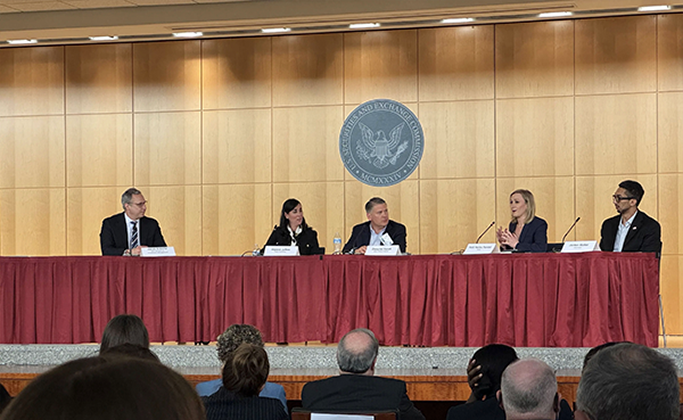 The SEC Small Business Forum provides one of the most direct channels for entrepreneurs and investors to contribute to federal policy discussions surrounding startup financing capital formation and continued growth..
Following the event, Sarrene Miller was invited to participate in an upcoming SEC roundtable as a technical advisor and entrepreneur, where she will continue contributing insights on the intersection of technology development, startup financing, and regulatory policy.
Through participation in forums such as these, TGS Tech aims to help strengthen the broader environment that supports innovation, entrepreneurship, and next-generation technology development in the United States.
Acknowledging the Forum Leadership
The discussions during the 45th Annual SEC Small Business Forum were guided by leaders from the U.S. Securities and Exchange Commission, industry experts, and policymakers who contributed their perspectives on improving access to capital for startups and growing companies.
TGS Tech would like to extend its appreciation to the SEC commissioners, forum organizers, and panel participants who led the discussions and shared their expertise during the event.
Key SEC Leaders and Speakers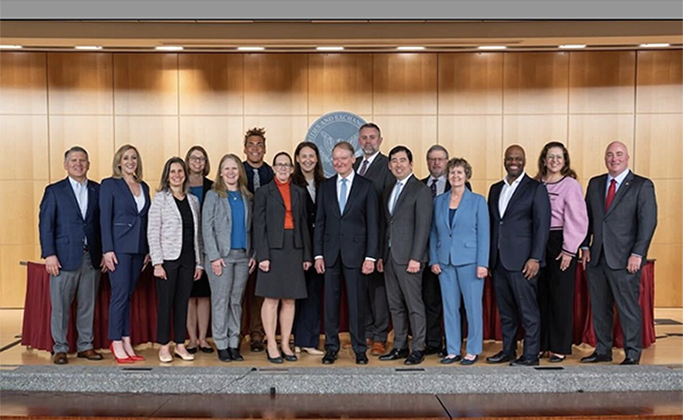
The forum featured remarks and participation from several members of the SEC leadership, including:
Paul S. Atkins
Chairman, U.S. Securities and Exchange Commission
Delivered remarks addressing capital formation and the evolving structure of private markets.
Hester M. Peirce
Commissioner, U.S. Securities and Exchange Commission
Spoke on regulatory considerations affecting startups and venture capital markets.
Mark T. Uyeda
Commissioner, U.S. Securities and Exchange Commission
Discussed regulatory policy impacting small business capital formation.
These remarks were part of a broader forum designed to gather insights from entrepreneurs, investors, and policymakers and ultimately produce recommendations that the SEC delivers to Congress regarding improvements to the U.S. capital-raising framework.