Part four: The Real Cost of What Is now Being Built
Where an Industry's Shortcuts Become a Community's Problem
 National averages are useful for understanding trends. They are not useful for understanding what is happening inside a specific household in Valdosta, Georgia or in communities across the Southern Company and Duke Energy service corridors absorbing the infrastructure cost of the current data center buildout.
Consider what the documented record shows for Georgia alone. The Georgia Public Service Commission approved six Georgia Power rate hikes over a two year period. As a result, the average Georgia Power residential customer is paying $43 more per month, or $516 more per year, on their electric bill compared to two years prior. Southern Company, Georgia Power's parent, earned $4.4 billion in 2024, a $400 million increase over the previous year.
That is the average. Averages include Atlanta area households whose bills rose modestly alongside Valdosta area households whose summer bills more than tripled. When those figures are combined into a single state or national average the households absorbing the steepest increases become invisible in the calculation.
Atlanta has some of the highest energy burdens in the country according to Georgia Tech, especially among low-income and Black households, meaning those residents pay a higher percentage of their income for electricity. The communities least able to absorb rate increases are absorbing the most disproportionate impact.
And the buildout driving those costs is not slowing. Georgia's only private electric utility plans to increase power capacity by 50% after state regulators agreed the plan is needed to meet projected demand from data centers. The construction cost is $16.3 billion but customers will pay $50 billion to $60 billion over coming decades including interest costs and guaranteed profit for the monopoly utility. Georgia Power says it needs 10,000 megawatts of new capacity with 80% of that flowing to data centers.
That is precisely the problem with national averages. They describe a country. They do not describe a household that shut down its pool to manage costs and still watched its summer bill more than triple in a single year.
Sources: https://atlanta.capitalbnews.org/georgia-psc-election-2024-energy-costs/ https://grist.org/georgia-psc/after-years-of-increases-georgia-power-rates-to-hold-steady-for-now/ https://broadbandbreakfast.com/georgia-regulators-approve-huge-electric-generation-increase-for-data-centers/
What the Numbers Actually Show
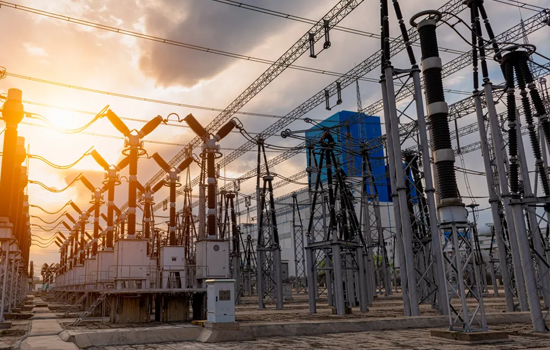 The national average electricity rate increase obscures a distribution that is anything but uniform. Communities located within or adjacent to the major data center buildout corridors served by Duke Energy and Southern Company are absorbing rate increases that bear no resemblance to the national figure. The communities with the most exposure are not the ones with the most political leverage to push back.
Investor-owned utilities nationwide are planning to spend at least $1.4 trillion through 2030. Utilities requested a record $31 billion in rate hikes in 2025, more than twice the near-record from 2024. Duke Energy alone is planning $103 billion in capital spending, the largest such commitment in the regulated utility industry, covering data center growth across North Carolina, South Carolina, Indiana and Ohio. Source: https://fortune.com/2026/04/25/utility-giant-duke-energy-spend-industry-record-103-billion-growth-data-centers-affordability/
Duke Energy filed requests with the North Carolina Utilities Commission for a 15% rate increase over two years, representing $1 billion in annual revenue increases for Duke Energy Carolinas alone. Electric bills in North Carolina have already increased approximately 22% since 2020. Sources: https://investors.duke-energy.com/news/news-details/2025/Duke-Energy-proposes-new-investments-in-North-Carolina / https://www.wsoctv.com/news/local/duke-energys-15-rate-hike-request-sparks-debate-over-data-center-energy-demand/QP6XOUKVFVGFNOKEBRSCBGSZCM/
The traditional utility cost recovery model was designed specifically to prevent this. Rate increases tied to documented capital investment, reviewed by utility commissions, balanced against residential ratepayer impact. That model did not disappear. It was bypassed by the scale and speed of the current buildout. Utility commissions are reviewing rate requests faster than the underlying infrastructure justification can be documented, reviewed and contested by the residential customers who will pay for it.
The Water Nobody Is Talking About
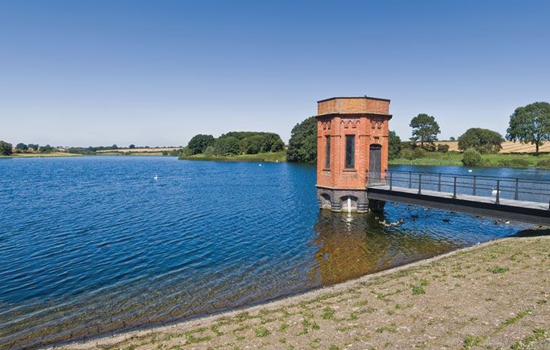 Electricity costs are visible. They arrive monthly in a bill with a number on it. Water consumption from data center operations is less visible and in many communities more immediately dangerous.
US data centers directly consumed 17.4 billion gallons of water in 2023, equivalent to roughly 160,000 American households. Annual direct consumption is projected to increase to between 38 and 73 billion gallons by 2028. Source: https://mostpolicyinitiative.org/science-note/data-center-water-use/
Large hyperscale data centers generally consume one to five million gallons of water per day. Five million gallons per day is equivalent to the water use of a town of 10,000 to 50,000 residents. Source: https://natureforward.org/data-centers-and-water-use/
The facilities being built fastest, under the loosest permitting requirements, in locations selected primarily for available land and power access, are not always being sited with water resource availability as a primary constraint. The communities bearing the water consumption impact are frequently rural communities already managing water stress. Unlike electricity costs which are distributed across a utility service territory, water drawn from a local aquifer or municipal system is drawn from a finite local resource. What a data center consumes is not available for agriculture, residential use or environmental flow.
The EPA regulations that would have required water impact assessment as part of preconstruction environmental review were among the requirements removed or curtailed by the regulatory changes documented in Part Three. Facilities that bypassed environmental review did not document projected water consumption or its impact on local resources before construction began. The communities living downstream of those decisions are finding out what was not assessed after the fact.
Where the Opposition Came From
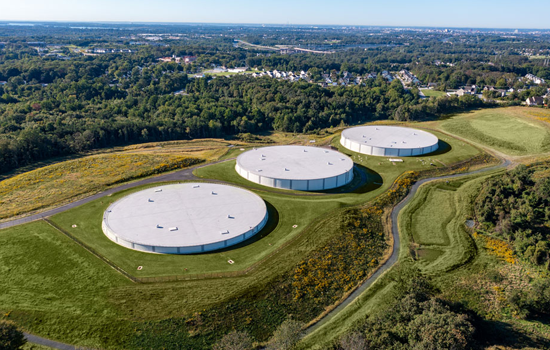 By the end of 2025 at least 48 data center projects representing $156 billion in planned investment had been blocked or stalled by local opposition. Project cancellations jumped from six in 2024 to 25 in 2025. In the first quarter of 2026 alone more than 20 additional projects were cancelled, a record quarterly pace. Source: https://fortune.com/2026/05/18/communities-are-blocking-billions-in-data-centers-big-tech-has-wagered-1-trillion-otherwise/
There are now 188 organized local opposition groups operating across 40 states. The opposition is not partisan. Republican officials in affected communities cite tax incentive structures that benefit data center operators at the expense of local budgets and grid strain that increases costs for existing residential and commercial ratepayers. Democratic officials cite environmental impacts, water consumption and the disproportionate burden on lower income communities. The concerns are different. The opposition is shared.
Data center development has moved from planning boards into state legislatures, utility regulation proceedings and local elections. It influenced outcomes in Virginia, New Jersey and Georgia in 2025. It is positioned to influence the 2026 midterm elections in affected corridors. Source: https://www.datacenterwatch.org/q3-q4-2025
The Communities That Did Not Get a Choice
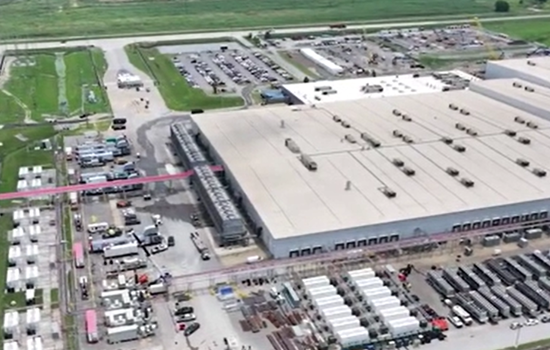 The Boxtown neighborhood in South Memphis did not vote on whether the xAI Colossus facility would be built near their homes. The preconstruction review that would have given them a formal voice was not required. The air quality assessment that would have documented projected emissions impact on their community was not conducted before construction began. The emissions controls that were publicly committed to were not installed on the units that operated for nearly a year.
Residents in Prince William County Virginia did not choose to have data center noise exceeding 60 decibels at their property lines. Residents in Chandler Arizona did not choose a decade of continuous facility hum that noise cancelling headphones could not block. The families in Sterling Virginia did not choose to sleep with earplugs in homes they owned before the equipment arrived.
Households in the Valdosta corridor did not choose to absorb infrastructure costs through rate increases. Southern Company reported $4.4 billion in earnings in 2024, a $400 million increase over the prior year, while its residential customers absorbed six rate hikes over the same two year period. Source: https://atlanta.capitalbnews.org/georgia-psc-election-2024-energy-costs/
None of these outcomes required community consent. None of them were put to a public vote. None of them went through the preconstruction review that would have required developers to document, justify and mitigate these impacts before they became permanent features of these communities' lives.
The $156 billion in blocked and delayed projects is not obstruction. It is the sound of communities that were not given a voice before the concrete was poured finding one after.
What Responsible Looks Like by Comparison
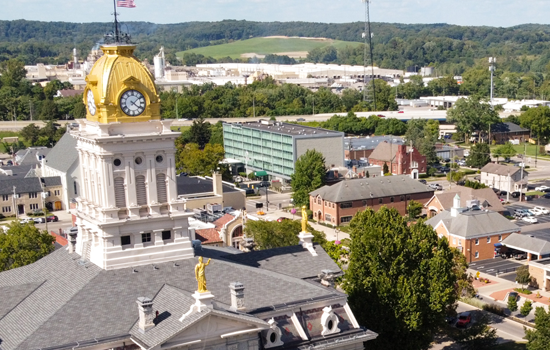 The contrast between the communities absorbing these costs and the communities where data centers were built correctly is not subtle.
The residents of Licking County Ohio, adjacent to one of the largest data center campuses in the United States, did not wake up to turbine noise. Their utility bills did not triple. They did not organize opposition groups or appear at planning commission hearings to reject new facilities. They drive past infrastructure they largely cannot identify as infrastructure and use the services it provides.
That difference is measurable, documented and verifiable. It is also entirely preventable going forward.
Valdosta residents have been asking those same questions directly. A community petition circulating in the region documents concerns that mirror the documented impacts examined throughout this series. Residents cite data center water consumption, noting that a single facility can require millions of gallons annually in a region that already experiences periodic drought conditions.
They question the economic calculus, observing that data center employment tends to be low in number and highly specialized, raising doubts about whether the local workforce would see meaningful long term benefit. And they raise the resource sustainability question that national coverage consistently underweights — that the cumulative cost of environmental impact may outlast any short term economic gain the facility brings.
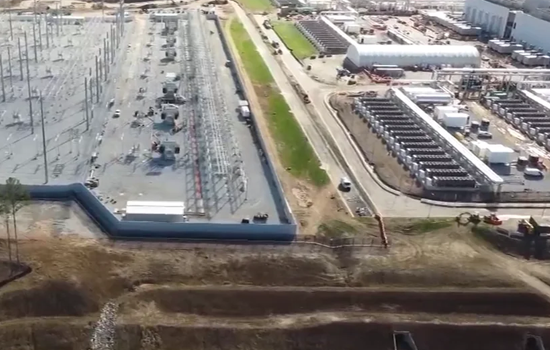 These are not abstract policy concerns. They are the documented observations of a community that was not given a formal voice before decisions were made and is finding one after. Source: https://www.change.org/p/stop-the-construction-of-data-centers-in-valdosta
Part Five examines what responsible going forward actually requires, what standards need to be restored or established, and why doing this correctly is also the better long term economic and infrastructure decision for operators, communities and the grid simultaneously.
What has this cost your household or your community?