Part Three: When the Framework Changed
Built to Last: When Everything Changed and Communities Began to Notice
 For nearly four decades the framework held. Through the dot-com surge, through the crypto mining stress test, through the early AI inflection, the regulatory structure that kept data centers invisible to their neighbors absorbed each new wave of demand without becoming a community crisis. The engineering discipline held. The permitting requirements held. The utility oversight held.
Then, beginning in January 2025, the framework did not hold. Not because the technology changed. Not because the demand became unmanageable. But because the regulatory structure that enforced responsible construction was systematically dismantled faster than the industry could self-correct and faster than communities could respond.
This part documents what changed, when it changed, and what the consequences have been for the communities now living with the results. It also documents the operators who held the line anyway, because that distinction matters as much as anything else in this series.
The Executive Order Stack
Five executive orders, issued across eleven months, removed the layered regulatory framework documented in Part Two. Each one targeted a different layer. Together they eliminated the preconstruction review, the emissions accountability, the community notification requirements, and the utility cost oversight that had kept the industry responsible for decades.
January 20, 2025: "Unleashing American Energy." Signed on the first day of the new administration, this order directed federal agencies to reduce what it characterized as regulatory burdens on energy production and framed environmental review requirements as hidden taxes on development. The practical consequence was the initiation of rollbacks to the National Environmental Policy Act implementing regulations that governed preconstruction environmental review of facilities including data centers. The review process that forced developers to document and answer for projected noise, air quality and community impacts before breaking ground was the first casualty.
January 20, 2025: "Declaring a National Energy Emergency." Issued the same day under the National Emergencies Act, this order cited US energy supply as inadequate on national security grounds and authorized agencies to bypass normal review timelines under emergency powers. That emergency authority became the legal hook for speed-over-engineering construction approvals that followed.
 January 20, 2025: "Initial Rescissions of Harmful Executive Orders and Actions." This order revoked prior environmental justice executive orders and directed agencies to terminate environmental justice offices and positions. The community impact review layer that would have flagged residential proximity issues, disproportionate burden on low-income communities, and inadequate public notification before siting was approved was eliminated on day one.
July 23, 2025: "Accelerating Federal Permitting of Data Center Infrastructure." This is the order that tied the stack together. It directed federal agencies to streamline permitting reviews, established categorical exclusions that curtailed environmental review of data center projects, and stated explicitly that the existing permitting system made it nearly impossible to build digital infrastructure at the required speed. The categorical exclusion language is the specific mechanism that allowed fast-build, acoustically unengineered facilities to bypass the review process that would have caught noise, siting, structural and emissions issues before construction began.
December 11, 2025: "Ensuring a National Policy Framework for Artificial Intelligence." This order directed the National Telecommunications and Information Administration to withhold approximately $21 billion in remaining BEAD broadband infrastructure funds from states with artificial intelligence regulations deemed incompatible with administration policy. The funds Congress had appropriated specifically for broadband buildout were being used as leverage for AI deregulation, an action legal scholars noted had no statutory basis in the BEAD legislation and that remains under active litigation as an unlawful impoundment of congressionally appropriated funds.
None of these orders were accompanied by supporting congressional legislation. The Impoundment Control Act of 1974, passed specifically because Congress recognized that executive branches would attempt to redirect or withhold appropriated funds, was the applicable statutory check. It was not invoked. The environmental review requirements removed by the July permitting order carried the force of law through NEPA's implementing regulations. Congress held the authority to codify or reverse those removals through legislation. It did not act. The regulatory framework that kept the industry responsible for four decades was not repealed. It was administratively dismantled while the institution constitutionally charged with oversight remained largely silent.
What the Dismantling Produced
 The consequences were not theoretical and they were not slow in arriving.
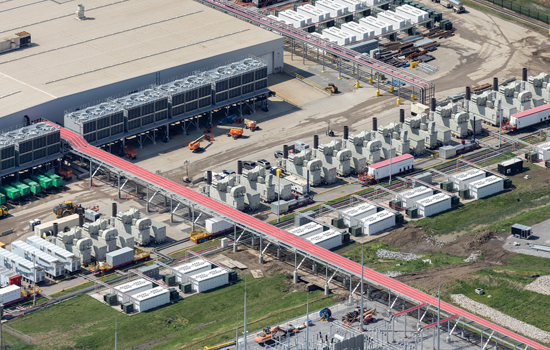
xAI's Colossus facility in Southaven, Mississippi became the most documented example of what construction without regulatory oversight produces. Fifty-nine natural gas turbines were deployed on site to power the facility, classified as temporary mobile equipment to avoid Clean Air Act permitting requirements. The Shelby County Health Department accepted that classification, enabling the turbines to operate without a public comment period or formal environmental review. The advanced emissions controls that xAI publicly stated would be installed were confirmed by the turbine supplier to not have been included on the temporary units actually deployed. The facility operated for nearly a year without pollution controls.
The community bearing the primary impact of that decision was Boxtown, a historically low-income Black neighborhood in South Memphis. Researchers from the University of Tennessee documented that turbine emissions contributed to local air pollution. The NAACP raised legal concerns. A congressional probe was initiated. Lawsuits followed.
In Sterling, Virginia, residents near fast-build data center installations began reporting noise levels exceeding 60 decibels at property lines, persistent low frequency hum penetrating homes, and sleep disruption that had no quiet period because the equipment generating it never stopped. The Virginia Joint Legislative Audit and Review Commission documented in 2024 that almost one third of the state's data centers were located within 200 feet of residentially zoned properties, a direct consequence of zoning ordinances classifying data centers alongside office space rather than as the industrial facilities they are.
In Chandler, Arizona, a community that had been living with data center noise since 2014 voted unanimously in 2025 to reject a newly proposed facility. A decade of resident complaints, noise cancelling headphones that provided no relief, and local authority responses that changed nothing had produced a community that had simply stopped accepting the premise that this was inevitable.
In 2025 alone, local opposition to data center projects led to the delay or cancellation of projects totaling $156 billion in planned investment. That is not a fringe reaction. That is an industry losing its social license in communities that were never given a meaningful voice before the concrete was poured.
The Operators Who Held the Line
 The regulatory rollbacks created conditions that made shortcuts easier and cheaper. They did not make responsible construction impossible. The distinction between those two outcomes is documented in the operational record of the operators who chose standards over speed.
Equinix, operating more than 270 data centers across 77 metropolitan areas in 36 countries, was named a Leader in the IDC MarketScape Worldwide Datacenter Services Sustainability 2025-2026 Vendor Assessment. In 2024 Equinix achieved 96% renewable energy coverage across its global portfolio for the seventh consecutive year. Its waste heat reuse program exported 14.5 gigawatt-hours of residual heat from data center operations in 2024, a 245% increase over the prior year, with excess thermal energy being fed directly into municipal district heating networks in Helsinki, Toronto and Paris. Its global average Power Usage Effectiveness of 1.39 in 2024 represented a 6% year over year improvement. Equinix was included in CDP's Climate Change A List, a recognition awarded to less than 2% of the more than 23,000 companies disclosing environmental data globally.
No noise complaints. No community opposition. No lawsuits. More than 270 facilities operating across 36 countries without incident.
Source: https://newsroom.equinix.com/2025-12-09-Equinix..Assessment / https://www.prnewswire.com/news-releases/equinix-..environmental-social-and-governance
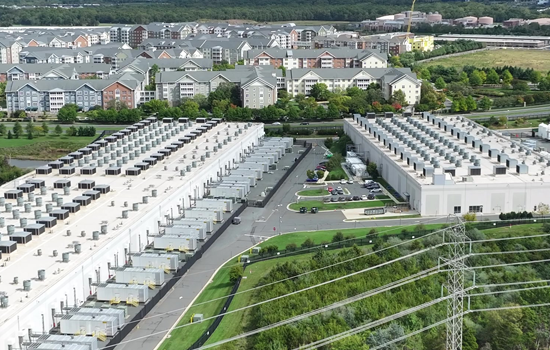 AWS, operating the largest cloud infrastructure in the world, was named a Leader in the 2025 IDC MarketScape for Worldwide Sustainable Cloud Datacenter Vendor Assessment and achieved 100% renewable energy matching for the second consecutive year in 2024. When residents in Prince William County Virginia reported that noise levels from some Amazon facilities routinely exceeded 60 decibels, Amazon did not litigate the complaint or dispute the measurement. It committed to retrofitting those facilities with acoustical shrouds. That response, identifying a problem and correcting it rather than minimizing it, is precisely the standard of responsible operation the regulatory framework was designed to enforce and that responsible operators apply voluntarily when the framework is weakened.
Sources: aws.amazon.com/sustainability/data-centers / https://www.eesi.org/articles/view/communities-are-raising-noise-pollution-concernsabout-data-centers
CoreWeave, which transitioned from cryptocurrency mining infrastructure into AI and high-performance computing, operated 32 dedicated data centers across the United States and Europe with more than 250,000 GPUs deployed as of December 2024, confirmed in independently filed regulatory documents. Its European expansion, representing a $3.5 billion investment across Norway, Sweden and Spain, was structured around 100% renewable energy sourcing. Its transition from crypto mining demonstrated that pivoting from high-density compute infrastructure to AI workloads can be executed within existing industrial frameworks. The company has faced operational challenges and securities litigation related to construction delays at third party facilities, a reminder that even operators with responsible intentions navigate a construction environment that the regulatory rollbacks made significantly more difficult.
Sources: https://www.businesswire.com/news/home/20250916332263/en/CoreWeave-..Sustainable-Computing / https://zlk.com/cases/coreweave-inc-class-action-lawsuit-crwv
The Harder Case
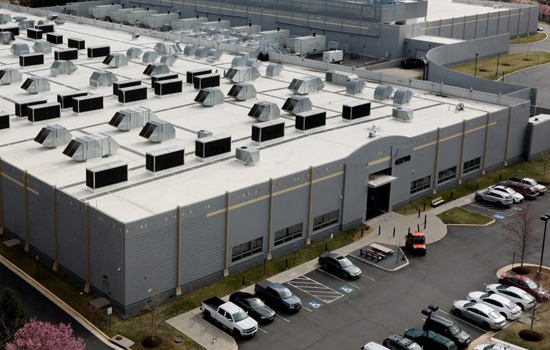 The most instructive example of what responsible commitment looks like inside a broken framework is not the operators who got everything right from the beginning. It is the ones navigating an environment where the regulatory protections that should have prevented problems were removed before they arrived.
Anthropic publicly committed to absorbing both infrastructure costs and demand-driven price effects as it expands across the United States, pledging to cover electricity price increases that consumers face from its data centers. The company invested in curtailment systems designed to reduce power usage during peak demand periods and grid optimization tools intended to help maintain lower prices for ratepayers. It committed to water-efficient cooling systems and emphasized environmental stewardship as a condition of its expansion. Those commitments, made in February 2026, represent what proactive community responsibility looks like when a company chooses to apply standards the regulatory framework no longer requires.
Anthropic is also now the primary tenant of the xAI Colossus facility in Memphis, the most publicly documented problematic data center installation in the country. The facility operated for nearly a year without pollution controls or Clean Air Act permits before Anthropic's involvement. The lawsuits, the congressional probe, and the community impact in Boxtown predate Anthropic's tenancy. They did not build it. They did not create the conditions that allowed it to be built that way. Those conditions were created by the regulatory dismantling documented earlier in this article.
That is not an excuse. It is a precise illustration of what happens when the preconstruction review that would have prevented a problematic facility from being built is removed. Responsible companies then face a choice between operating inside imperfect infrastructure that already exists or not operating at all. Neither option restores the community impact that proper permitting would have prevented.
The communities of Boxtown did not get a voice before the concrete was poured. The regulatory framework that would have given them that voice was gone before the facility was proposed. That is the consequence this series has been building toward, and it is not the fault of any single operator. It is the predictable result of dismantling a framework that worked without replacing it with anything that protects the people who live next to what gets built in its absence.
The Variable Was Never the Companies
The operators who built correctly under the framework prove that responsible construction at scale is achievable. The operators making public commitments to community protection in the absence of enforceable requirements prove that the instinct toward responsibility did not disappear when the regulations did.
What disappeared was the requirement that everyone meet the same standard. And when the floor drops away, the communities bearing the cost are not the shareholders, the operators, or the policymakers. They are the residents of Boxtown. The households in Georgia watching their utility bills climb toward four figures in the summer. The families in Sterling, Virginia sleeping with earplugs in homes they owned before the equipment arrived.
Part Four examines the financial consequences of that cost distribution in detail, because national averages do not tell that story. Those living in and around Valdalsa Ga. do.
What would it take for the communities absorbing these costs to have had a voice before the decisions were made?