Part Two: The Era That Worked
Built to Last: How an Industry Grew Without Anyone Noticing
 Despite what many are experiencing today, noise bleeding through bedroom walls at 3am, utility bills that bear no resemblance to the same month a year ago, and air quality concerns in communities that never asked to host an industrial power plant, data centers were not always this way. For the better part of four decades, they were among the most responsibly engineered and quietly operated facilities in the commercial infrastructure landscape.
That is not an opinion. The numbers say so directly.
What the Record Shows
By the end of 2024 the United States was home to 5,388 data centers, ten times more than China and most European countries, accounting for 45% of all data centers globally. Source: stocklytics.com/content/the-united-states-counts-5388-data-centers-70-more-than-the-next-ten-largest-markets-combined
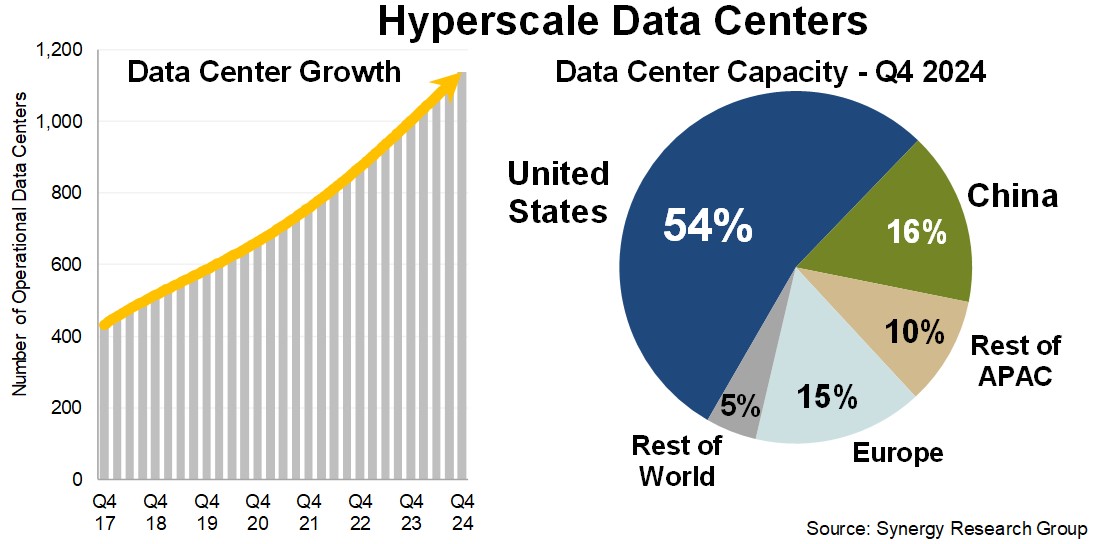
Of those, 1,136 were large hyperscale facilities operated by major cloud providers, a number that had doubled over the preceding five years. The United States accounted for well over half of total worldwide hyperscale capacity measured by megawatts of critical IT load.
Source: https://srgresearch.com/articles/hyperscale-data-center-count-hits-1136..
Between 2019 and 2024 the number of hyperscale data centers doubled. More than 135 new hyperscale facilities came online in 2024 alone. It took less than four years for total capacity to double.
Source: https://programs.com/resources/data-center-statistics
 Those facilities collectively consumed 183 terawatt-hours of electricity in 2024, representing 4.4% of total US electricity consumption. Global data center electricity consumption reached 415 terawatt-hours, approximately 1.5% of worldwide electricity demand.
Source: https://cargoson.com/en/blog/number-of-data-centers-by-country, citing International Energy Agency
The scale was already enormous. The vast majority of those 5,388 facilities were operating quietly, within established regulatory frameworks, without noise complaints, air quality concerns, or community opposition.
The standards were holding across an industry of significant size and complexity.
Then 2025 happened.
How the Industry Actually Grew
The commercial data center industry did not arrive fully formed. It grew incrementally, inheriting its engineering discipline from the telecommunications infrastructure that preceded it and building on that foundation through successive waves of demand, each one larger than the last, each one absorbed within the existing framework of responsible construction and operation.
 The early commercial facilities of the 1990s were purpose-built from the ground up. Raised floor plenum systems managed airflow. Hot aisle and cold aisle containment directed heat away from equipment and toward cooling systems. Computer room air conditioning units were sized, positioned and acoustically isolated as part of the structural design. Generators were housed in sound-attenuated enclosures. Setbacks from property lines were engineered, not estimated. These were not luxury features added at the end of a construction project. They were the baseline requirements that defined what a data center was.
By the mid-1990s the dot-com surge was driving the first major commercial expansion of the industry. Investment poured in. New facilities came online rapidly. And the engineering discipline held. Operators understood, because regulators required and communities expected, that speed of construction did not exempt a facility from the standards that made it a responsible neighbor.
That expectation was not informal. It was codified.
The Regulatory Framework That Made It Work
The data center industry operated within a layered regulatory structure that addressed every dimension of its community impact. Each layer existed for a specific reason and protected a specific interest. Together they formed the framework that kept 5,388 facilities operating without the complaints now associated with a fraction of their number.
The National Environmental Policy Act required environmental impact review before major construction could begin. That review was not bureaucratic friction. It was the mechanism that forced developers to answer, before breaking ground, whether a proposed facility would affect air quality, water resources, noise levels and community character in its surrounding area. It required those answers to be documented, reviewed and responded to. It gave affected communities a voice before the concrete was poured.
EPA air permitting required facilities to document and limit their emissions, including from backup generation equipment, as a precondition to operation. The permits were specific, measurable and enforceable. A facility that exceeded its permitted emissions faced consequences. That accountability created a direct incentive to engineer correctly rather than cheaply.
 Local zoning ordinances classified data centers as the industrial operations they were, not as office buildings or warehouse storage. That classification determined setback requirements, noise ordinance applicability, hours of operation limitations and community notification requirements. Siting a data center in a location zoned for light commercial or residential use required variance approval, public hearings and documented justification. The process was not fast. It was thorough by design.
OSHA occupational noise standards, carried directly forward from the telco era that preceded the industry, governed what workers inside these facilities could be exposed to and for how long. Those standards indirectly enforced acoustic engineering because facilities that could not protect their own workers from noise exposure could not operate.
Acoustic setback requirements, embedded in local building codes and sometimes in state environmental regulations, established minimum distances between noise-generating mechanical equipment and property lines. Those requirements were calculated based on projected decibel levels at the property boundary, not inside the facility. They forced acoustic engineering to be outward-facing, not just internally compliant.
The utility cost recovery model that governed how electricity rate increases were approved and distributed kept the infrastructure costs of serving large industrial customers from being passed directly and immediately to residential ratepayers. Utility commissions reviewed rate increase requests, required justification tied to documented capital investment, and balanced the interests of industrial customers against residential ones. The process was imperfect. It was also a meaningful check on the kind of rate increases communities in Georgia, Indiana, North Carolina and South Carolina are absorbing today. More on that in Part Five.
None of these requirements were invented for data centers. They were applied to data centers because data centers are industrial facilities, and industrial facilities in the United States have operated within this framework for decades. The framework worked because it was enforced before construction, not litigated after.
The Stress Test Nobody Talks About
Before artificial intelligence became the demand narrative justifying the current wave of fast-built facilities, the data center industry had already survived a more sudden and less predictable compute demand surge. Cryptocurrency mining, particularly the Bitcoin mining boom that accelerated through 2017 and 2021, placed enormous and largely unplanned demand on power grids, cooling infrastructure and data center capacity across the United States.
Th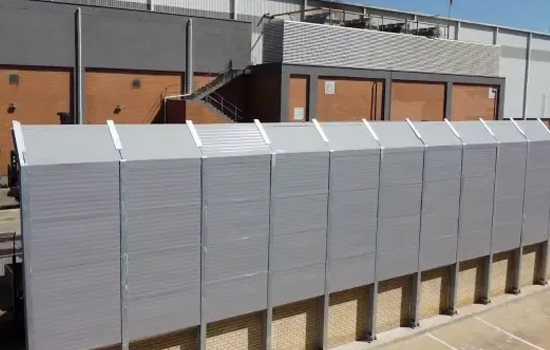 e surge was not gradual. China's 2021 ban on cryptocurrency mining pushed a significant portion of global mining operations to the US almost overnight. By the end of 2024 the United States accounted for approximately 40% of global Bitcoin mining. The power density demands of crypto mining hardware are comparable to AI compute workloads. The thermal management requirements are comparable. The continuous operation profile is identical.
The industry absorbed it. Operators who pivoted into crypto mining hosting used industrially zoned land, accessed existing power infrastructure and managed thermal and acoustic requirements within their engineering envelope. The communities around properly sited crypto operations did not end up in senate hearings.
The crypto mining surge was in many respects a more acute stress test than the AI demand growth that followed it. It was faster, less predictable and driven by speculative economics rather than planned infrastructure growth. The AI inflection, by contrast, had been visible and measurable since at least 2019, giving responsible operators five years of advance notice to adapt their facilities and infrastructure planning accordingly.
The responsible operators did adapt. AWS, Equinix, CoreWeave and others scaled their AI workload capacity within existing frameworks, on existing industrially zoned land, with existing utility relationships and within existing regulatory requirements. CoreWeave, which fully transitioned from crypto mining infrastructure into AI and high-performance computing, now operates 32 dedicated data centers across the US and Europe with more than 250,000 GPUs deployed, targeting 100% renewable power for future expansions.
That is what responsible adaptation looks like. It is documented, operational and already at scale.
The Communities That Never Noticed
The most effective evidence that scale alone does not produce the problems now being reported is not a regulatory document or an engineering specification. It is the experience of the communities living next to the largest data center infrastructure in the country.
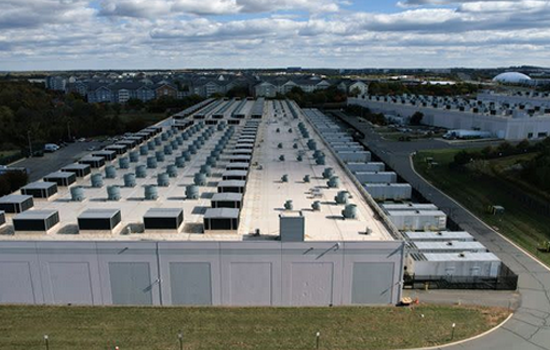 Northern Virginia is home to what is commonly called Data Center Alley. The Ashburn corridor alone hosts more than 11,000 megawatts of power supply across hundreds of facilities. AWS us-east-1, the oldest and largest AWS cloud region in the world, has operated in Northern Virginia since 2006. It encompasses six availability zones and 187 individual facilities. It runs artificial intelligence workloads today at a scale that would have been unimaginable when it was commissioned.
Most people who live and work in that corridor have no idea the infrastructure is there. They drive past it daily. They use its services constantly. They do not file noise complaints, appear in regulatory hearings or organize community opposition groups. They do not notice it because it was built not to be noticed. That was the requirement. That was the standard.
AWS us-east-2 in Ohio tells the same story at an even larger physical scale. Multiple campuses spanning thousands of acres across Licking and Franklin Counties. Individual structures exceeding one million square feet. 500 megawatts of known IT capacity. From the road, warehouse buildings. Nothing more.
Unlike communities near recent fast-built facilities, the residents of Licking County did not wake up to turbine noise or attend air quality hearings. Because the facilities next to them were built correctly.
That outcome was not accidental. It was engineered, permitted, regulated and enforced. And it held at hyperscale, across decades, through the crypto mining surge and into the early AI era, right up until the framework that produced it began to change.
The Variable Was Always the Standards
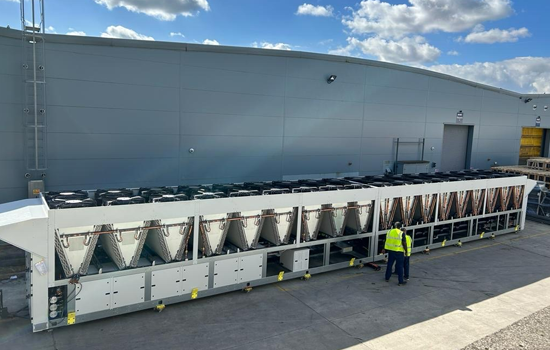 For nearly four decades the data center industry scaled from a handful of purpose-built commercial facilities to 5,388 operational sites consuming 4.4% of US electricity, without becoming the noise, pollution and cost burden it is now becoming in select communities. That track record is the baseline against which current events should be measured.
The crypto mining surge tested the framework under acute pressure. The framework held. The early AI inflection tested the framework under sustained and growing pressure. The framework held. The responsible operators adapted, scaled and continued operating without incident.
What the record does not show is any technical or engineering reason why that framework had to change. The discipline existed. The standards existed. The enforcement mechanisms existed. And they were working.
Part Three examines what happened to those standards beginning in 2025, why it happened, and what the documented consequences have been for the communities now living with the results.
Have you noticed a data center near you that you never knew was there? Or one that is impossible to ignore?